


Understanding UV Rays
Ultraviolet (UV) rays from the sun are the primary cause of skin damage, which can lead to premature aging, sunburn, and even skin cancer. There are two main types of UV rays to be aware of: UVA and UVB. UVA rays penetrate deep into the skin and are responsible for aging and long-term damage, while UVB rays cause sunburn and can directly damage the DNA in skin cells.
Essential Sun Safety Tips
-
- Use Broad-Spectrum Sunscreen
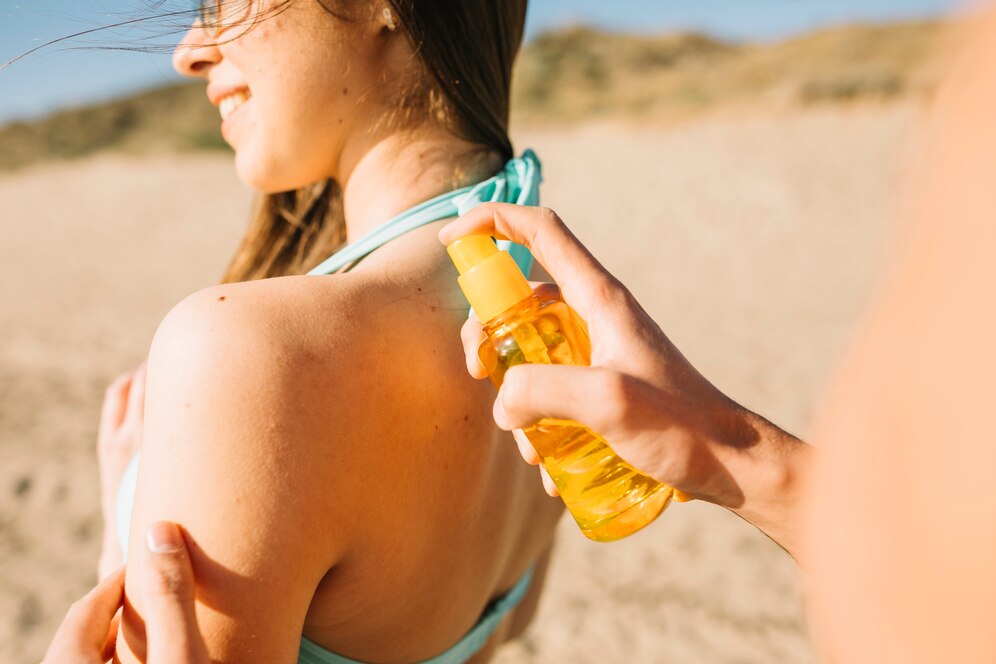
A broad-spectrum sunscreen protects against both UVA and UVB rays. Choose a sunscreen with at least SPF 30 (50 for children) and apply it generously to all exposed skin. Remember to reapply every two hours, especially after swimming or sweating. Sunscreen is a key element of sun safety and should be used daily, even on cloudy days. - Seek Shade During Peak Hours
The sun’s rays are strongest between 10am to 4pm. During these hours, try to stay in the shade as much as possible. If you’re outdoors, seek natural shade under trees or use umbrellas and canopies to minimise direct sun exposure. - Wear Protective Clothing
Clothing can provide a physical barrier against UV rays. Opt for long-sleeved shirts, long pants, and wide-brimmed hats that cover the face, neck, and ears. - Wear Sunglasses with UV Protection
Your eyes are also vulnerable to UV damage. Choose sunglasses that block 100% UVA and UVB rays to protect your eyes and the delicate skin around them. - Stay Hydrated
Sun exposure can lead to dehydration, which affects your skin’s health. Drink plenty of water throughout the day to stay hydrated, especially when spending extended periods outdoors.
- Use Broad-Spectrum Sunscreen
Additional Considerations
- Check the UV Index: The UV index provides a forecast of the expected risk of overexposure to UV rays. Check the daily UV index and plan outdoor activities accordingly.
- Be Cautious with Medications: Some medications can increase your skin’s sensitivity to the sun. Consult with your doctor if you’re taking any medications and ask about their potential impact on sun sensitivity.
Learn More About Sun Safety
Protecting your skin from UV damage is essential for maintaining long-term skin health. By following these sun safety tips, you can enjoy the outdoors while minimising the risk of skin damage. For more detailed information on sunscreen, sun safety, and how to protect your skin, visit the NHS website. They provide valuable resources and advice to help you stay safe in the sun.